
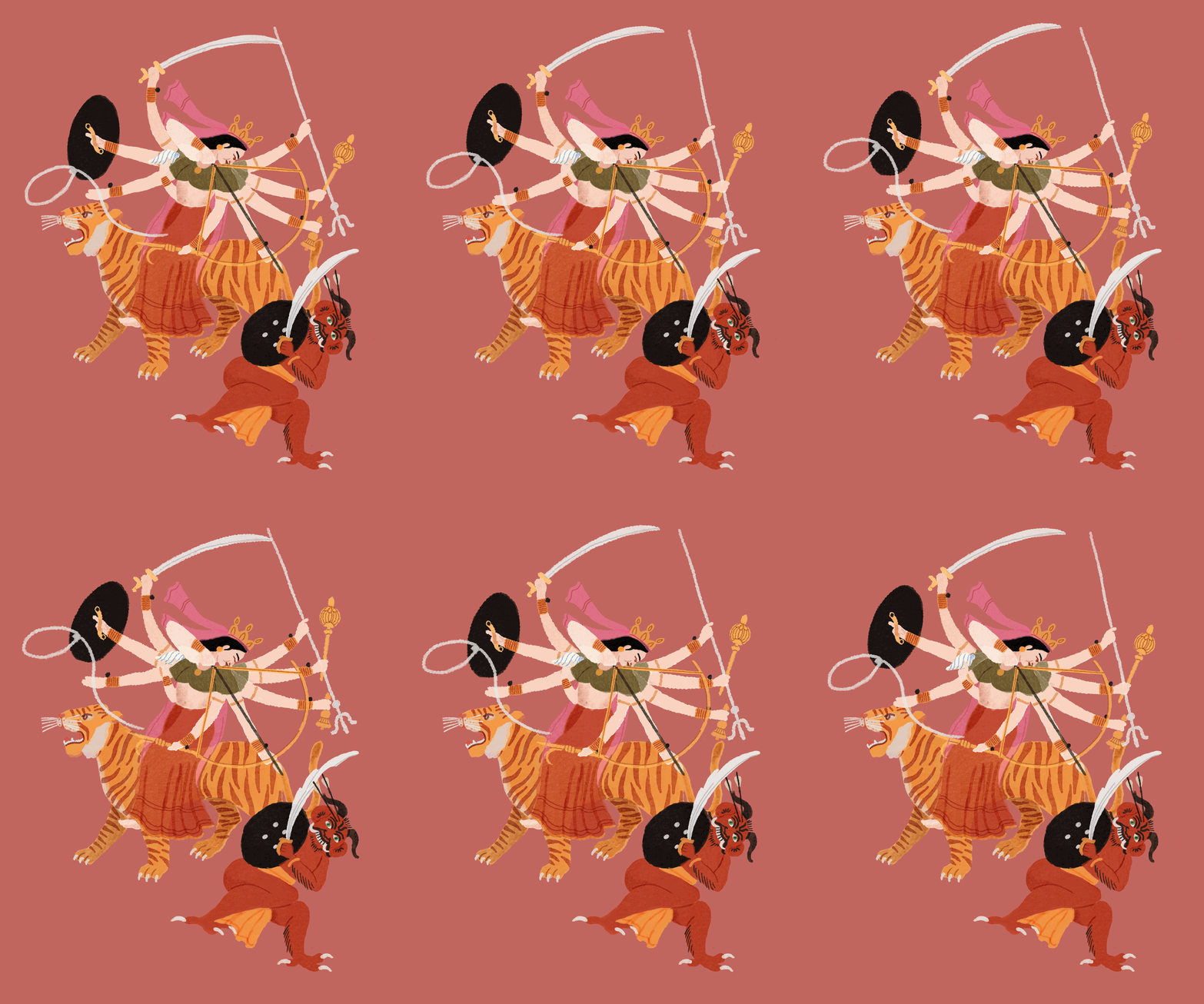
(inspired by an anonymous drawing from the 18th century).
Durgā means “she who is difficult to cross or overcome”, “the invincible one”.
The Great Mother carries within her a deeply maternal nature, but also immense strength. She is one of the manifestations of Śakti, the divine force and power that manifests itself and gives movement to life.
As many of you already know, the gods have their own vehicles (animals). Durgā’s is usually the lion, although she is also depicted riding a tiger. She changes her vehicle depending on the battle. Clever!
Durgā represents a part of ourselves that has the ability to take a step back, to pause and observe, but without running away. To find within ourselves the strength we need to act without being carried away by what we are feeling. A goddess of emotional intelligence!
Durgā is the one who fights, but she does not fight out of hatred.
She fights for what she believes in and for the restoration of Dharma, remaining centred in what is love, peace and harmony.
In the Devī Māhātmya, also known as the Durgā Saptashatī, the “700 Verses to the Great Goddess”, which forms part of the Mārkaṇḍeya Purāṇa, we find the story of Durgā and her battle against Mahiṣāsura, the buffalo demon.
Mahiṣāsura represents a force that takes on different forms, difficult to overcome, and no one is able to defeat him. Durgā can.
The story can also be read as a deeply internal journey: the demon is what happens when we allow the ego, anger, arrogance or ignorance to take control. Durgā is the strength that exists within us to face whatever throws us off balance and takes hold of us.
A beautiful metaphor for our own inner battle.
So, to fight for what we believe in, for what is just, for what we wish to protect, without losing our presence, without losing our centre, without forgetting what we are ultimately trying to preserve: love, peace and harmony.
Jaya Mā
Victory to the Great Mother.
Silvia