
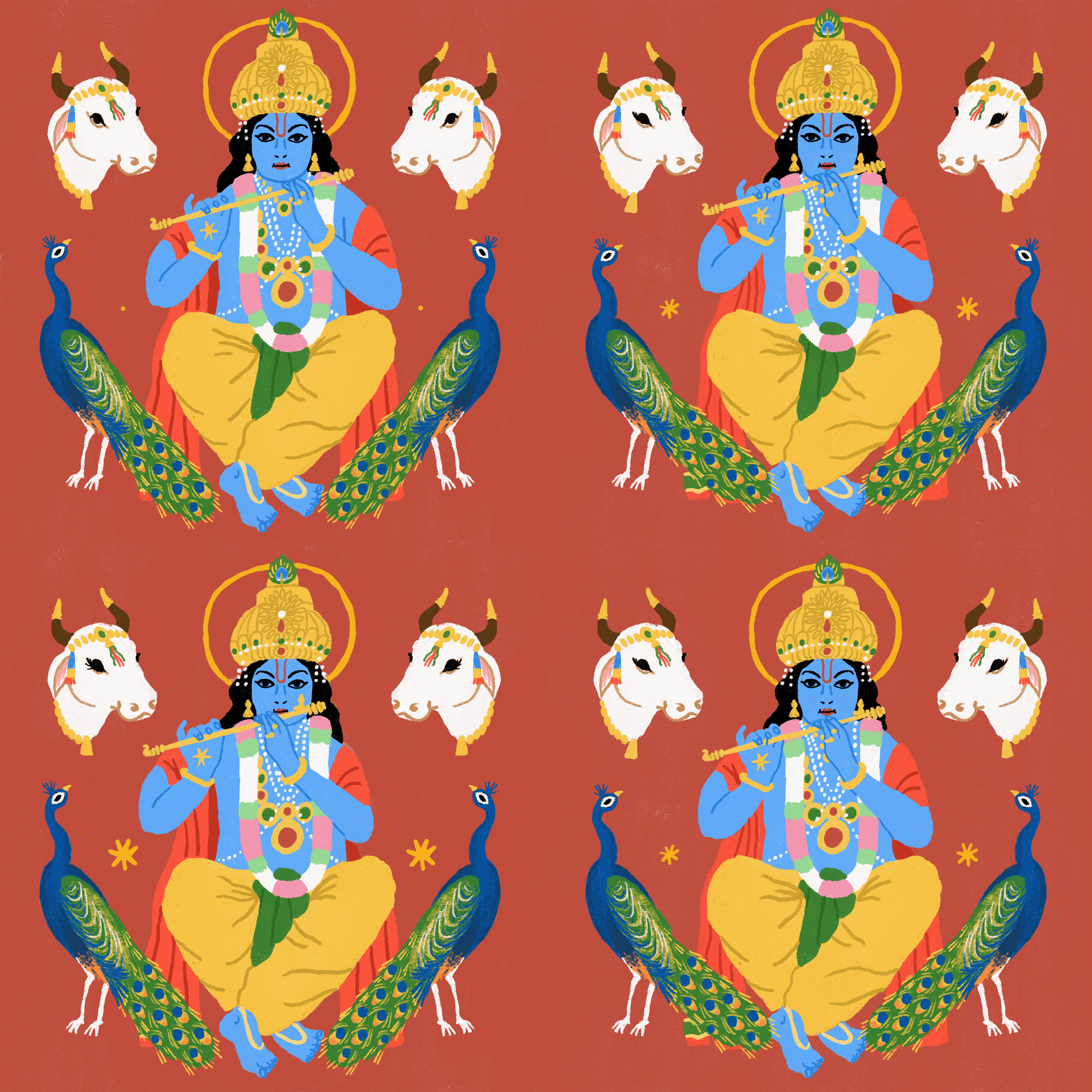
Krishna is considered one of the incarnations of the god Vishnu, one of the principal deities of the Hindu trinity, which also includes Brahma and Shiva (but I’ll talk more about that another day!).
The story of Krishna can be found in the epic Mahabharata, and more specifically in the section known as the Bhagavad Gita. Krishna plays a crucial role in the battle, serving as charioteer and advisor to Arjuna, one of the warrior princes, and offering him moral and spiritual guidance while discussing themes such as duty (Dharma) and the nature of being.
There are also many stories and legends surrounding Krishna, including his famous loving dances, known as the “Rasa Lila” performed to enchant the gopis (cowherd women). He would often play his flute in the forests of Vrindavan. The melodious sound of the flute was irresistible and drew the gopis towards him. During the dance, each gopi felt that Krishna was dancing exclusively with her. In reality, Krishna multiplied himself so that each gopi could experience a personal and intimate connection with him.
The Rasa Lila is understood as a metaphorical representation of the intimate relationship between the devotee and the divine, transcending the limitations of the physical world. This story emphasises the concept of Bhakti (devotion). The gopis’ love for Krishna is pure and selfless, transcending social and worldly boundaries. It invites us to reflect on how devoted we are to the divine, whatever that may mean to each of us. Can we try to let go of our ego and material desires?
The animals associated with Krishna are the peacock and the cow. The peacock is his vehicle, while cows are especially associated with Krishna when he is depicted as Gopala, the protector of cows. Krishna’s relationship with cows symbolises his connection with nature and pastoral life, as well as the importance of respecting animals, something we should all embrace.
Krishna is an inspiring example of how love can be a force that multiplies, encouraging us to practise and cultivate love continuously throughout our lives.
Silvia