
I recently read a poem by the Portuguese writer Egito Gonçalves that inspired me to write these words:
… but I breathe, I breathe, and build a pair of lungs that can grow wings.
The essence of life lies in the breath, in the way we inhale and exhale, and in how we absorb prana, the vital energy that permeates our entire being.
The relationship between life, energy and breath is beautifully described in traditional Yoga texts such as the Hatha Yoga Pradipika, which states:
“As long as prana remains in the body, there is life. When it leaves, death follows.” and also “When prana is unsteady, the mind is unsteady. When prana becomes steady, the mind too becomes steady.”
Learning how to breathe is the essential preparation for practising Pranayama correctly. Pranayama is one of the principal branches of Yoga and one of its oldest practices. Although it is often translated as breath control, its meaning is much broader. The word combines prana, meaning vital energy, and ayama, meaning expansion or extension.
Here are some of the main types of Pranayama, which I will explore in greater depth in future articles and, as always, in our classes:
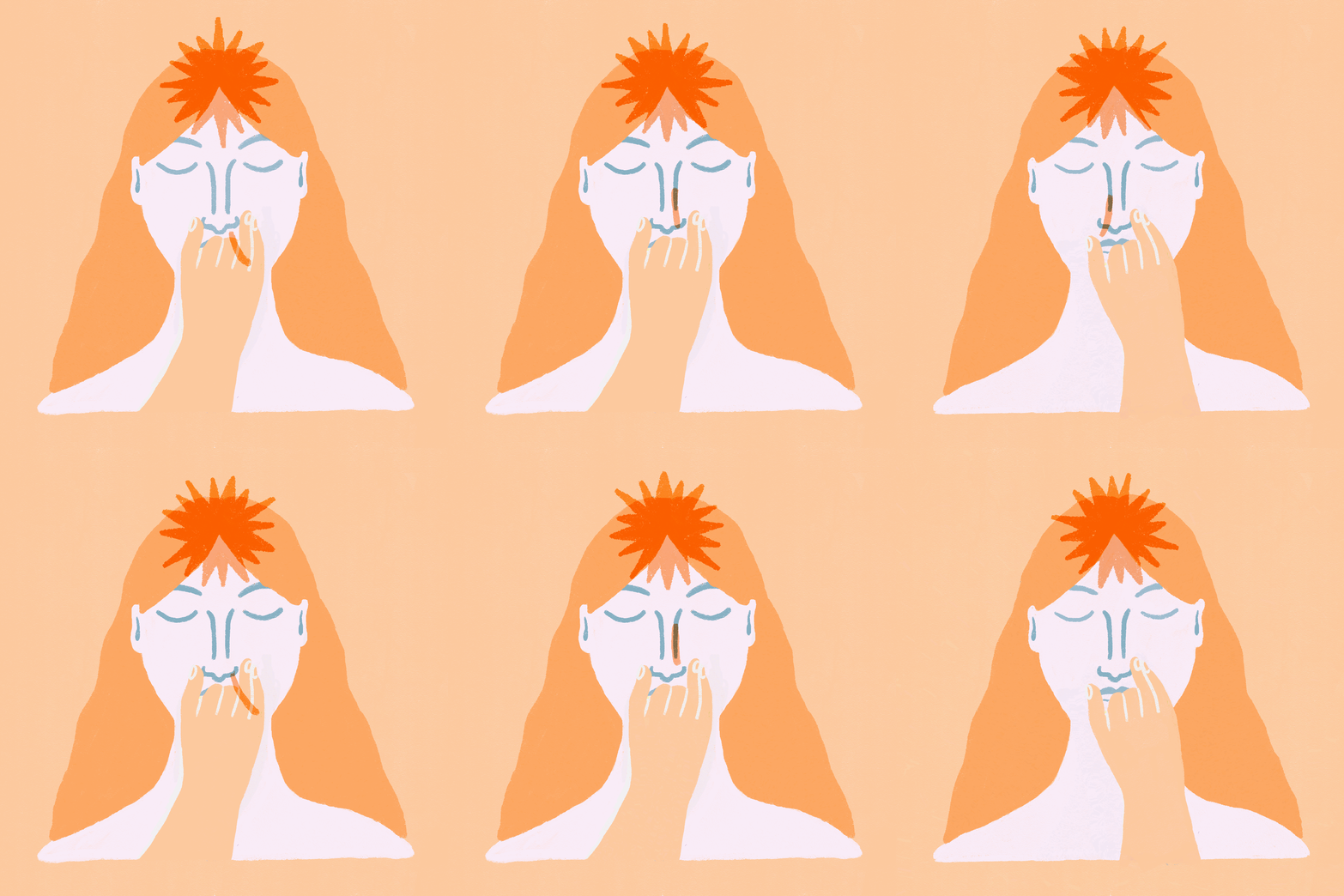
✴︎ Nadi Shodhana (Alternate Nostril Breathing), as shown in the animation
✴︎ Ujjayi (Victorious Breath)
✴︎ Kapalabhati (Skull-Shining Breath)
✴︎ Bhastrika (Bellows Breath)
✴︎ Sitali e Shitkari (Cooling Breaths)
✴︎ Bhramari Pranayama (Bee Breath)
By cultivating conscious breathing, we are building, as the poem suggests, “a pair of lungs that can grow wings”. A mindful breath brings mental balance, physical wellbeing, and helps us manage anxiety and stress.
As night falls, I recommend practising Nadi Shodhana, followed by gentle abdominal breathing before going to sleep, allowing the breath to flow naturally without forcing either the inhalation or the exhalation.
Good night,
Silvia